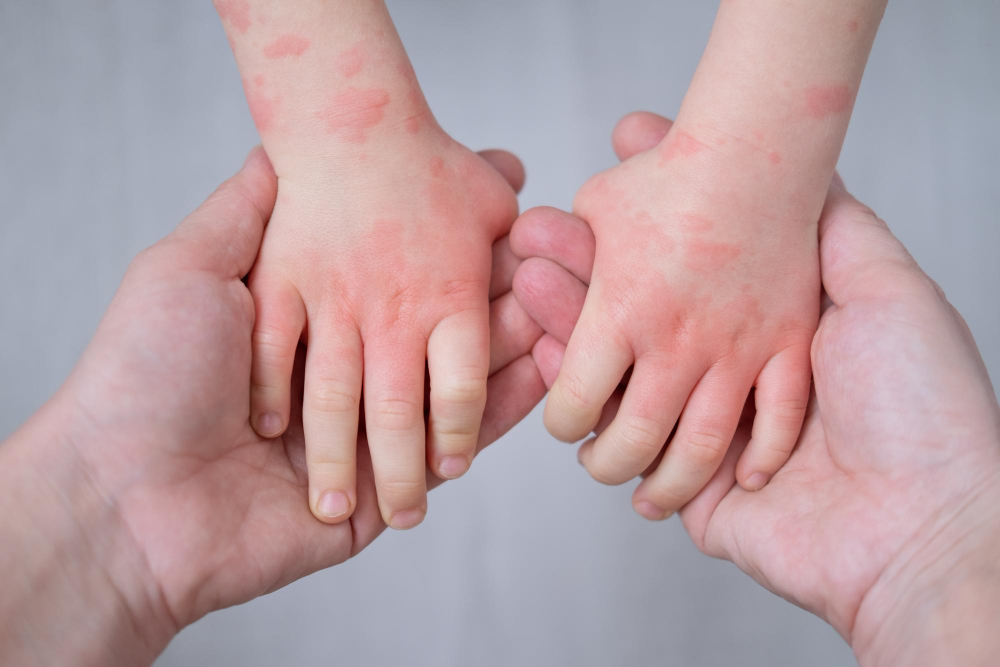
What Is Pediatric Eczema (Atopic Dermatitis)?
Pediatric eczema, also called atopic dermatitis, is a common skin condition in children. It causes dry, itchy, and red skin patches. Often, these patches appear on the face, arms, or legs. Many children experience eczema flare-ups in kids, which can be uncomfortable. Understanding childhood atopic dermatitis causes helps parents manage symptoms better. While eczema is not contagious, it can affect a child’s daily life. Early care and attention can make a big difference.
Why Identifying Triggers Matters
Knowing what causes eczema flare-ups is important. When parents spot triggers, they can help prevent or reduce symptoms. For example, avoiding certain soaps or fabrics may keep the skin calm. In addition, managing eczema triggers can help children feel more comfortable. Over time, this can improve sleep and mood. Therefore, learning about triggers is a key step in caring for your child’s skin.
Common Triggers for Pediatric Eczema
Many things can cause eczema to flare up in children. However, each child is different. Some triggers may affect one child but not another. Here are some of the most common triggers:
How to Reduce Exposure to Triggers
Parents can take steps to help manage eczema triggers. First, choose gentle, fragrance-free soaps and detergents. Next, dress your child in soft, breathable fabrics. In addition, keep your home clean to reduce dust and pet dander. During dry or cold weather, use a humidifier to add moisture to the air. Also, encourage your child to take short, lukewarm baths instead of hot ones. After bathing, gently pat the skin dry and apply a moisturizer right away. If you notice certain foods cause flare-ups, talk to your doctor before making changes. Finally, help your child manage stress with calming activities or routines.
When to See a Pediatrician
Sometimes, home care is not enough. If your child’s eczema gets worse or does not improve, it is time to see a pediatrician. For example, if the skin becomes very red, swollen, or starts to ooze, seek medical help. In addition, if your child has trouble sleeping or seems very uncomfortable, a doctor can suggest new treatments. Early care can prevent infections and help your child feel better. According to the CDC and pediatric dermatology experts, regular check-ups are important for children with frequent eczema flare-ups.
In summary, understanding pediatric eczema triggers can help you manage your child’s symptoms. For the best care, consult a pediatrician for personalized advice on managing your child’s eczema triggers.